Funny When You Take a Diabetics Sock Off
In this section:
- How tin can diabetes affect my anxiety?
- What can I do to go on my feet healthy?
- When should I encounter my health care provider about foot problems?
- Clinical Trials
Pes bug are common in people with diabetes. Y'all might exist afraid you lot'll lose a toe, foot, or leg to diabetes, or know someone who has, but yous can lower your chances of having diabetes-related pes problems by taking intendance of your feet every twenty-four hour period. Managing your claret glucose levels, as well called blood sugar, can as well help go on your feet healthy.
How can diabetes touch my feet?
Over fourth dimension, diabetes may cause nerve damage, also called diabetic neuropathy, that tin can cause tingling and pain, and tin can make you lot lose feeling in your feet. When you lose feeling in your feet, you may not experience a pebble inside your sock or a cicatrice on your human foot, which can lead to cuts and sores. Cuts and sores can become infected.
Diabetes too can lower the amount of blood catamenia in your feet. Not having enough blood flowing to your legs and feet can go far hard for a sore or an infection to heal. Sometimes, a bad infection never heals. The infection might atomic number 82 to gangrene.
Gangrene and pes ulcers that do non become improve with treatment tin lead to an amputation of your toe, foot, or part of your leg. A surgeon may perform an amputation to preclude a bad infection from spreading to the rest of your body, and to save your life. Practiced human foot care is very important to forbid serious infections and gangrene.
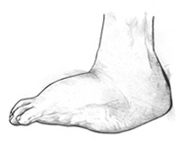
Although rare, nervus damage from diabetes can atomic number 82 to changes in the shape of your feet, such as Charcot'due south foot. Charcot'due south pes may offset with redness, warmth, and swelling. Later on, bones in your feet and toes can shift or intermission, which tin cause your feet to have an odd shape, such equally a "rocker lesser."
What can I do to keep my feet healthy?
Piece of work with your health care team to make a diabetes cocky-intendance plan, which is an action plan for how you will manage your diabetes. Your plan should include foot intendance. A foot md, also called a podiatrist, and other specialists may exist part of your health care team.
Include these steps in your foot intendance programme:
Check your feet every day
You lot may take human foot problems, just feel no pain in your feet. Checking your feet each twenty-four hour period will help y'all spot issues early on before they get worse. A skilful way to remember is to check your anxiety each evening when you take off your shoes. Likewise cheque between your toes. If you accept trouble angle over to encounter your anxiety, endeavour using a mirror to see them, or inquire someone else to look at your feet.
Await for problems such equally
- cuts, sores, or reddish spots
- swelling or fluid-filled blisters
- ingrown toenails, in which the edge of your nail grows into your pare
- corns or calluses, which are spots of rough skin caused past also much rubbing or pressure on the same spot
- plantar warts, which are flesh-colored growths on the bottom of the feet
- athlete'southward foot
- warm spots
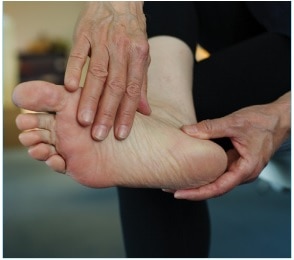
If yous have certain foot bug that make it more likely you will develop a sore on your foot, your md may recommend taking the temperature of the peel on different parts of your anxiety. A "hot spot" tin can be the offset sign that a blister or an ulcer is starting.
Encompass a blister, cut, or sore with a bandage. Smooth corns and calluses as explained beneath.
Wash your anxiety every day
Wash your feet with lather in warm, non hot, h2o. Test the water to make sure it is non likewise hot. You tin use a thermometer (90° to 95° F is condom) or your elbow to examination the warmth of the h2o. Do not soak your feet because your skin will go too dry out.
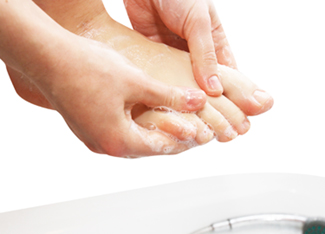
After washing and drying your feet, put talcum pulverisation or cornstarch between your toes. Pare betwixt the toes tends to stay moist. Pulverization will go along the skin dry to help prevent an infection.
Smooth corns and calluses gently
Thick patches of skin called corns or calluses tin can grow on the feet. If y'all have corns or calluses, talk with your foot md about the best way to intendance for these foot problems. If y'all have nerve damage, these patches can become ulcers.
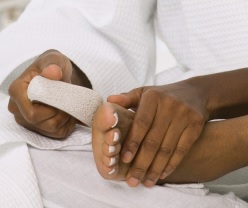
If your doctor tells you to, use a pumice stone to smooth corns and calluses after bathing or showering. A pumice stone is a type of rock used to smoothen the skin. Rub gently, only in one direction, to avoid tearing the peel.
Practice NOT
- cut corns and calluses
- utilise corn plasters, which are medicated pads
- use liquid corn and callus removers
Cutting and over-the counter corn removal products tin harm your pare and crusade an infection.
To proceed your skin shine and soft, rub a thin glaze of lotion, foam, or petroleum jelly on the tops and bottoms of your feet. Do non put lotion or cream between your toes because moistness might crusade an infection.
Trim your toenails straight across
Trim your toenails, when needed, after you wash and dry your feet. Using toenail clippers, trim your toenails directly beyond. Do not cut into the corners of your toenail. Gently smooth each boom with an emery lath or nonsharp boom file. Trimming this way helps preclude cutting your skin and keeps the nails from growing into your pare.
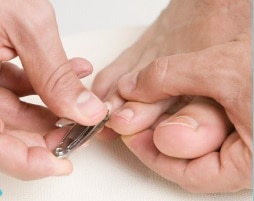
Take a human foot dr. trim your toenails if
- you cannot see, experience, or accomplish your anxiety
- your toenails are thick or yellowed
- your nails curve and grow into the skin
If y'all want to get a pedicure at a salon, you should bring your own boom tools to prevent getting an infection. You tin can ask your health care provider what other steps you lot can take at the salon to prevent infection.
Clothing shoes and socks at all times
Article of clothing shoes and socks at all times. Do not walk barefoot or in just socks – even when you lot are indoors. You could step on something and hurt your feet. You may not experience whatsoever pain and may not know that you hurt yourself.
Cheque the inside of your shoes earlier putting them on, to brand sure the lining is smooth and free of pebbles or other objects.
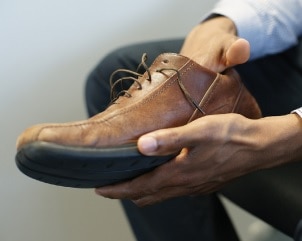
Make sure you wear socks, stockings, or nylons with your shoes to keep from getting blisters and sores. Choose clean, lightly padded socks that fit well. Socks with no seams are best.
Article of clothing shoes that fit well and protect your feet. Hither are some tips for finding the right type of shoes:
- Walking shoes and athletic shoes are adept for daily wear. They back up your feet and let them to "breathe."
- Do not clothing vinyl or plastic shoes, because they exercise not stretch or "breathe."
- When buying shoes, make sure they experience good and accept enough room for your toes. Buy shoes at the end of the solar day, when your feet are the largest, and so that you can find the best fit.
- If yous accept a bunion, or hammertoes, which are toes that curl under your feet, you may demand extra-wide or deep shoes.1 Do non wear shoes with pointed toes or high heels, because they put besides much pressure on your toes.
- If your feet have changed shape, such as from Charcot'due south foot, yous may need special shoes or shoe inserts, called orthotics. You also may need inserts if you accept bunions, hammertoes, or other human foot bug.
When breaking in new shoes, just wearable them for a few hours at first and and then cheque your feet for areas of soreness.
Medicare Part B insurance and other health insurance programs may assist pay for these special shoes or inserts. Ask your insurance plan if it covers your special shoes or inserts.
Protect your feet from hot and cold
If you have nervus damage from diabetes, you may burn down your feet and not know you did. Take the following steps to protect your feet from heat:
- Wear shoes at the beach and on hot pavement.
- Put sunscreen on the tops of your feet to prevent sunburn.
- Keep your feet away from heaters and open fires.
- Do not put a hot water bottle or heating pad on your feet.
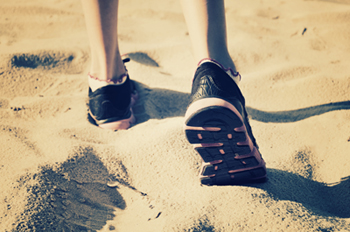
Wear socks in bed if your feet become cold. In the winter, wear lined, waterproof boots to keep your feet warm and dry.
Go on the blood flowing to your feet
Attempt the following tips to improve blood catamenia to your feet:
- Put your feet upward when you are sitting.
- Wiggle your toes for a few minutes throughout the day. Move your ankles up and down and in and out to help blood flow in your feet and legs.
- Practise not wear tight socks or elastic stockings. Do non effort to hold upwards loose socks with rubber bands.
- Be more physically active. Cull activities that are easy on your feet, such as walking, dancing, yoga or stretching, swimming, or bicycle riding.
- Stop smoking.
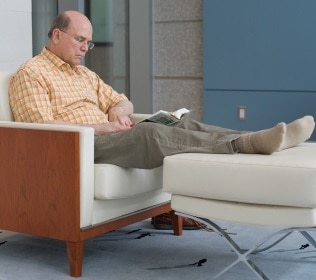
Smoking can lower the amount of blood flow to your anxiety. If you smoke, ask for aid to stop. You can get help by calling the national quitline at 1-800-QUITNOW or i-800-784-8669. For tips on quitting, get to SmokeFree.gov.
Get a foot check at every health care visit
Ask your health care team to check your anxiety at each visit. Take off your shoes and socks when y'all're in the test room so they volition retrieve to bank check your feet. At least one time a year, get a thorough foot test, including a check of the feeling and pulses in your feet.
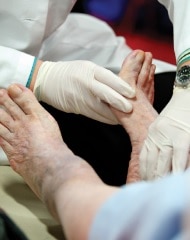
Go a thorough foot examination at each health intendance visit if you lot accept
- changes in the shape of your anxiety
- loss of feeling in your feet
- peripheral artery illness
- had foot ulcers or an amputation in the past1
Ask your health intendance team to show you how to intendance for your feet.
When should I see my health intendance provider about foot problems?
Call your wellness intendance provider correct away if yous have
- a cut, blister, or trample on your foot that does not start to heal after a few days
- peel on your pes that becomes red, warm, or painful—signs of a possible infection
- a callus with dried blood inside of information technology,which ofttimes can be the first sign of a wound nether the callus
- a foot infection that becomes blackness and smelly—signs you might take gangrene
Ask your provider to refer you lot to a pes doc, or podiatrist, if needed.
Clinical Trials
The National Plant of Diabetes and Digestive and Kidney Diseases (NIDDK) and other components of the National Institutes of Health (NIH) deport and support research into many diseases and conditions.
What are clinical trials, and are they right for you?
Clinical trials are role of clinical research and at the heart of all medical advances. Clinical trials look at new ways to forestall, detect, or care for illness. Researchers as well use clinical trials to look at other aspects of care, such as improving the quality of life for people with chronic illnesses. Find out if clinical trials are right for you.
What clinical trials are open up?
Clinical trials that are currently open and are recruiting can exist viewed at www.ClinicalTrials.gov.
References
Source: https://www.niddk.nih.gov/health-information/diabetes/overview/preventing-problems/foot-problems
0 Response to "Funny When You Take a Diabetics Sock Off"
Post a Comment